Short answer: Decide your format and divisions, check any sanctioning rules, open paid registrations, build a schedule from a round robin, then publish results and standings where parents can find them.
Pick a format and divisions
Start with how many teams you can fit. Count your fields or courts, the nights or mornings you have them and how long each game runs.
Group teams into divisions by age or standard. Each division plays its own round robin and gets its own standings.
A single round robin with an even number of teams needs one fewer round than teams. 8 teams play 7 rounds and 28 games. With an odd number, every team gets one bye.
Check the rules before you take money
Check with your provincial association whether your league needs to be sanctioned, and what insurance that brings, before you take any money.
Open registrations with payment
Take payment when teams or players register, not after. Chasing fees by text once the season has started eats into every week that follows.
Ask for an email address and make sure it's confirmed. A list of addresses that work is the only way every family hears about a change.
Set a cap on each division and keep a waiting list, so late entries have somewhere to go when a spot opens.
Build the schedule
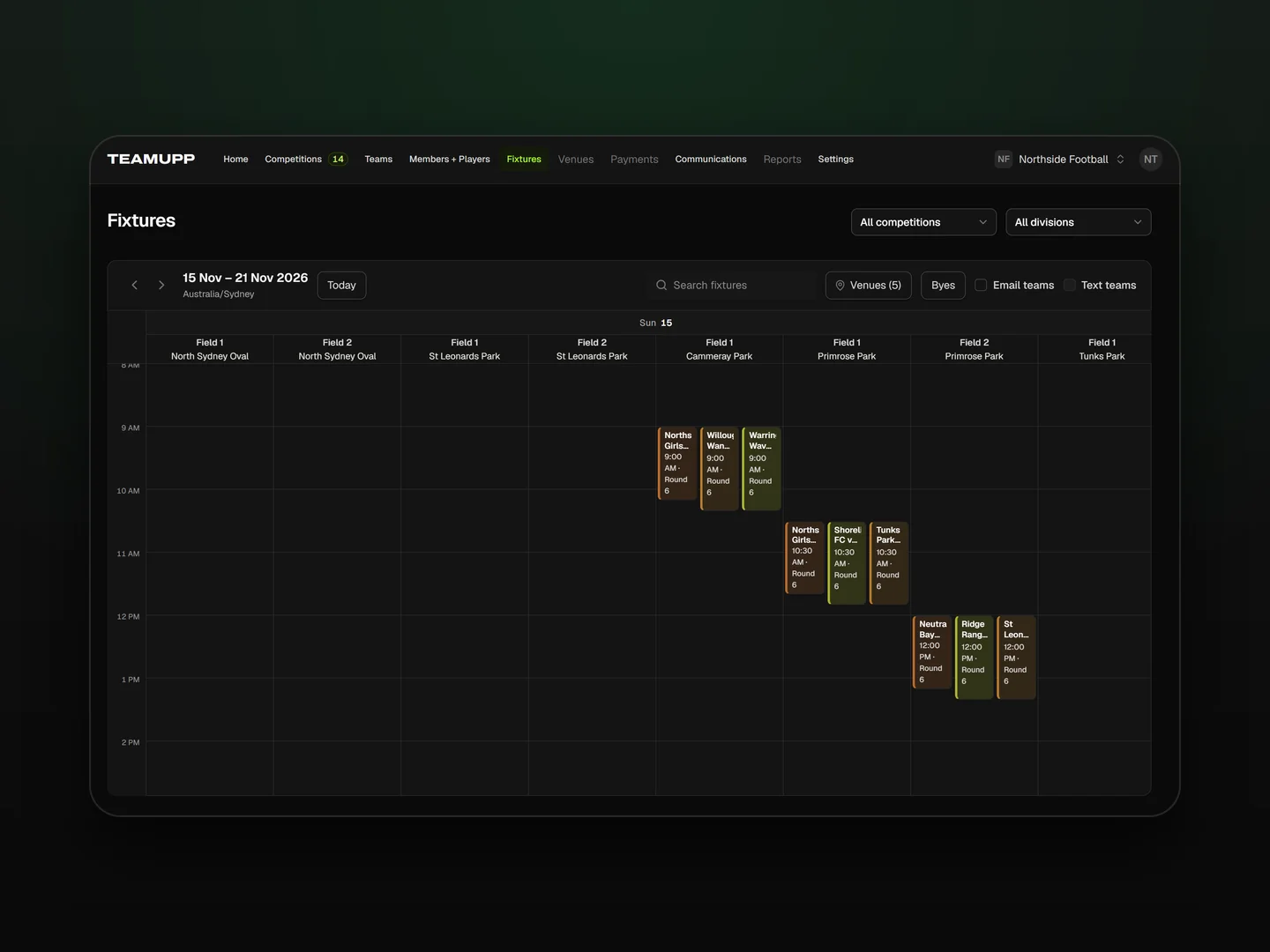
Generate the rounds from a round robin, then place each round on a date and each game on a field or court.
Check for clashes before you publish. A team playing twice at once, or two games on one court, is easier to fix now than on the night.
Plan for a rainout. Leave a spare date at the end of the season so you can move a round without rebuilding everything.
Set up the standings
Most soccer competitions give 3 points for a win, 1 for a draw and none for a loss. Write this into your rules before round one, along with how you'll break a tie on points.
Tiebreakers differ by competition. England's FA starts with goal difference and US Youth Soccer starts with head-to-head, so check your association's order and write it into your rules.
Keep parents in the loop
Publish the schedule and standings somewhere parents can open on a phone without an app or a login.
When a game moves, message only the teams it affects, by email or text. Everyone else can stop checking the group chat.