Short answer: Check sanctioning first, set a format of pools then a knockout, take paid team entries, build fixtures across your pitches and publish results on a page parents can open.
Check sanctioning first
Under FA Rules a competition must be sanctioned, and every team in it must be affiliated. Playing unsanctioned football is a breach of FA Rules.
County FAs run sanctioning and set their own lead times and fees. Northamptonshire FA asks for at least three weeks and a £30 fee, while Suffolk FA asks for at least 7 days and £20. Middlesex FA now handles it through The FA's Competition Portal.
Sanctioning matters for insurance too. Northamptonshire FA lists public liability cover as one of the benefits, and says unsanctioned clubs and referees aren't covered.
Pick a format
Pools followed by a knockout give every team several games before anyone goes home. A straight knockout is quicker, but half the teams are out after one game.
Seed the knockout from pool results. At US Youth Soccer regional championships, for example, pool winners play the highest-points teams from the other pools.
In a pool of 4 teams, each team plays 3 games, with 6 games in the pool. A pool of 5 needs 5 rounds, with one bye for each team.
Take paid team entries
Take the entry fee when teams register. A team that has paid turns up.
Set a cap on teams per age group and keep a waiting list for late entries and withdrawals.
Build the day
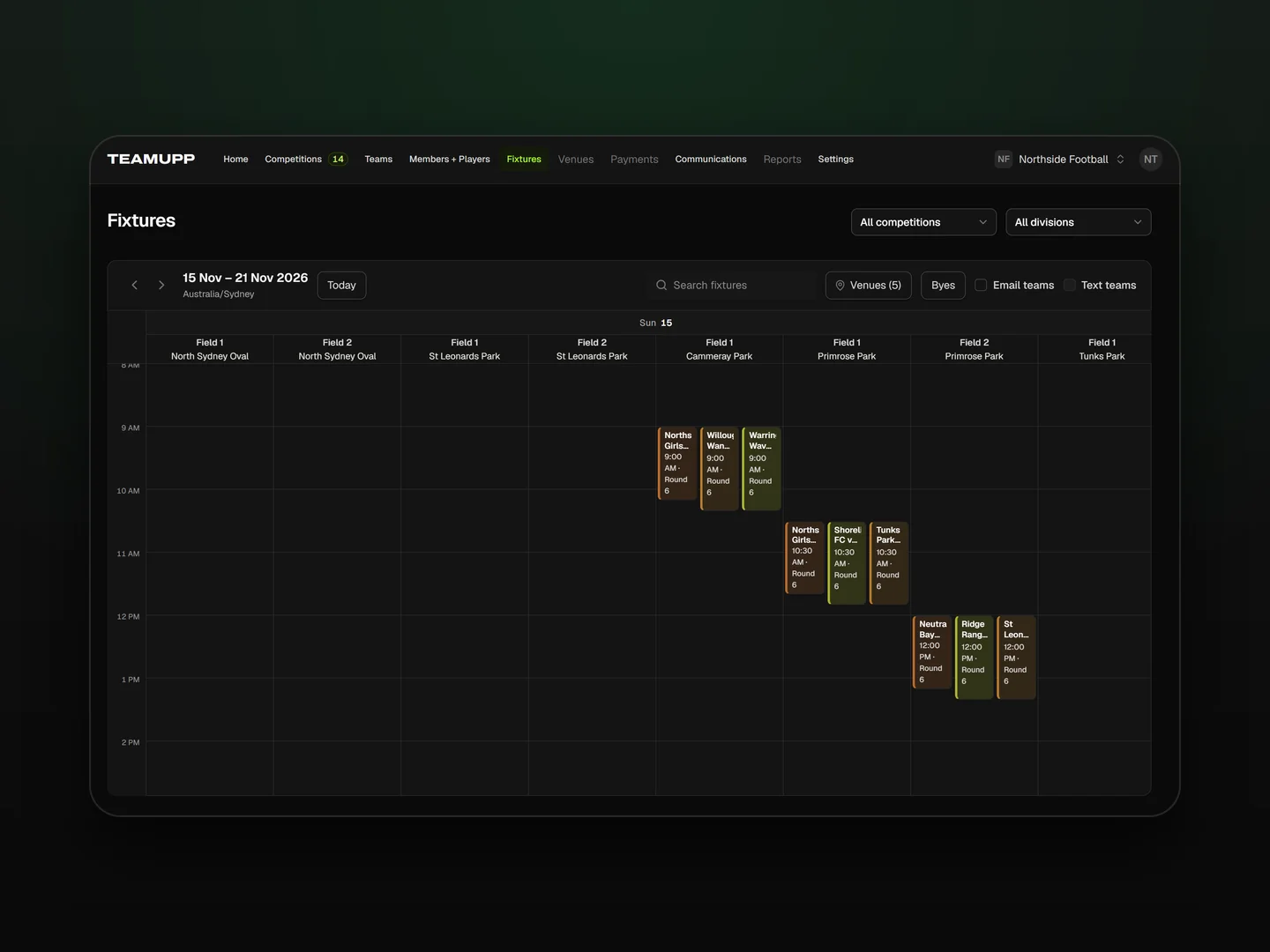
Lay out every pitch against every time slot. Leave a gap between a team's games so nobody plays back to back.
Check for clashes before you publish, then send each team its fixtures by email or SMS.
Publish results on the day
Most football competitions give 3 points for a win, 1 for a draw and none for a loss. Write this into your rules before round one, along with how you'll break a tie on points.
The FA Standard Code of Rules uses goal difference first when two teams finish level on points.
Enter scores as games finish so the pool tables and the knockout fill in while parents watch.